

The Challenge
• Miles of Line, Limited Crews – Small utilities often patrol large distribution areas with few crews, making restoration slow and costly.
• Aging Infrastructure – Much of the U.S. grid was built 50–75 years ago and many components are now 40–70 years old, well beyond their intended lifespan. Outdated
equipment increases the risk of outages and higher maintenance costs.
• Weather, Vegetation, and Wildlife – Overhead distribution lines are highly exposed, leading to frequent temporary and permanent faults that are difficult to pinpoint.
• Budget Pressures – Distribution spending has surged to $50.9 billion in 2023, up 160% since 2003, as utilities struggle to balance modernization with affordability.
• Limited Automation – Many small systems still lack SCADA or OMS, relying on manual patrols and customer calls to locate outages
The Impact of Outages
Essential Service Disruptions – Hospitals,water systems, schools, and emergency response agencies are strained when power is lost.
Community Hardship – Food spoilage, heating/cooling loss, and communication failures directly affect residents, especially in small towns or remote areas.
Impact on Farms & Businesses – Outages interrupt farming operations, cold storage, and local businesses, creating financial strain in communities where
agriculture and small business are critical.
The Solution
- Patrolman Plus is an overhead communicating fault indicator (FI) that provides immediate visibility to fault locations.
- Integrates with OMS, GIS, or SCADA when available, or operates through the SGS Web Portal for utilities without advanced systems.
- Highlight: Easy to deploy, cost-effective, and scalable.

Proven Improvement
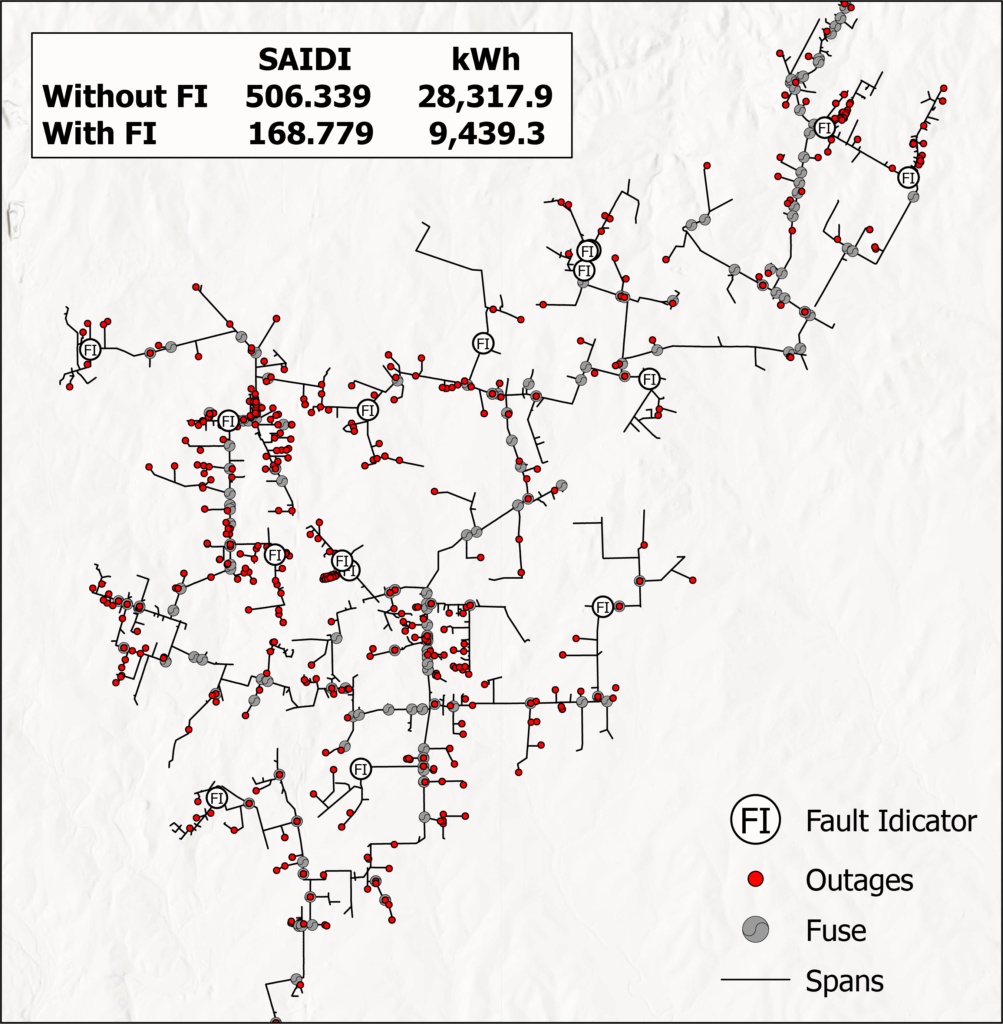
- SAIDI reduced from 506 to 169
- Patrol miles reduced from 13.88 to 4.26
- Annual power sales increased by 18,000 kWh
Best Practices for Deploying Fault Indicators
- Target Long Feeders – Prioritize circuits with the greatest patrol distance to reduce crew travel time.
- Protect Critical Loads – Place FIs upstream of hospitals, water systems, and key commercial or farming operations to ensure faster restoration.
- Focus on High-Outage Areas – Use fault history and vegetation/terrain data to identify trouble spots where FIs will have the biggest impact.
- Plan for Scalability – Start with problem feeders, then expand deployment as budgets allow.
